

One day a very senior journalist called me and enquired – Do you know the DGP in Goa! I asked what happened. He said my son had gone with few friends to Goa and they have hit some car – they might be harassed by the police he said. I quickly called a senior IPS officer in Delhi and got to know the details from the concerned SHO. We got to know his son was not driving but his friend was driving and he was drunk – the strange part of the story was the person driving the car was a doctor in a reputed Delhi hospital. But before the matter could be sorted out they paid almost two lakh rupees to the person whose car was hit. They said that they tried to pacify the victim so that he did not file a complain in the police station. The SHO said ” Sir the boys have already paid to the owner of the car- the matter did not come on my table!”
Goa reported 8 cases of unruly tourist behaviour in 2025, up from 1 in 2024, Chief Minister Dr. Pramod Sawant had informed the media. Offences included rash driving, assault and molestation. Police have increased vigilance in tourist hotspots to maintain law and order. These types of headlines makes us think that it is better to travel abroad then visit a tourist resort in India. From the colourful lanes of Goa’s historic Fontainhas to the crowded hills of Shimla and Kodaikanal, a quiet frustration is growing across India’s top tourist destinations. Residents are no longer complaining only about traffic and litter — many now feel like strangers in their own homes.

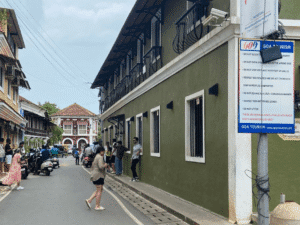
In Goa’s famous Latin Quarter of Panaji, locals say uncontrolled tourism has crossed the line. Narrow streets meant for peaceful neighbourhood life are now packed with tourists filming reels, blocking roads, trespassing into private gardens, and turning heritage homes into “Instagram backdrops.” Elderly residents in São Tomé and Fontainhas say daily life has become stressful and intrusive.
The issue is no longer about tourism alone — it is about dignity, privacy, safety, and survival of local culture. Residents have accused some visitors of reckless behaviour, loud music, public nuisance, littering, and drunken driving through narrow heritage lanes late at night. Locals say rash driving and drinking culture among some tourists have become serious concerns in Goa, endangering both residents and visitors. Authorities and citizens alike insist that drinking and driving must be strictly avoided in Goa, where crowded roads and heritage zones leave little room for reckless behaviour.
But tourists too have their complaints.
One of the biggest recurring grievances against Goa’s tourism ecosystem is the alleged dominance of the “taxi mafia” — unregulated taxi networks accused of overcharging, intimidating tourists, and resisting app-based transport services. Many visitors claim that local taxi operators behave aggressively with tourists and often charge exorbitant fares for short distances.
Critics say the problem has persisted for years because enforcement remains weak. There is a growing perception among tourists that local authorities and police frequently turn a blind eye to anti-tourist behaviour by sections of the taxi lobby, damaging Goa’s image as a welcoming destination. While many taxi drivers are honest and depend on tourism for survival, the actions of aggressive groups have created resentment among visitors and even among locals who fear the state’s reputation is suffering.
Authorities in Goa have issued advisories asking tourists to respect local communities by not littering, blocking roads, climbing on private property, or creating nuisance in residential areas. However, residents argue that warnings without penalties achieve little.
The anger is spreading beyond Goa.
In Shimla, nearly 15,000 vehicles reportedly entered the hill town daily during peak tourist weeks — three times the city’s carrying capacity. In Coorg, locals say resorts and homestays are exhausting water resources. In Kodaikanal and Ooty, residents complain of endless traffic jams, plastic waste, and destruction of forests to accommodate commercial tourism.
Religious gateways like Joshimath and hill destinations across Uttarakhand and Himachal Pradesh are also struggling under the pressure of unchecked construction, environmental damage, and overcrowding.
What worries locals most is that tourism profits often do not stay with the community. Large hotel chains, outside investors, and commercial tourism operators benefit the most while residents deal with rising property prices, water shortages, noise pollution, and environmental destruction.
India has not yet witnessed the aggressive anti-tourism protests seen in places like Barcelona or Venice, but the warning signs are visible. The message from locals is becoming clear: tourists are welcome, but irresponsible behaviour is not. Posters and banners in Goa alerts people to avoid the places and reasons for confrontation.
Respect local culture.
Do not litter.
Do not invade private spaces for photos and reels.
Avoid rash driving.
Never drink and drive in Goa.
Tourism-related harassment — whether by unruly tourists or exploitative operators — must not be ignored. Tourism can support livelihoods, but if left unregulated, it risks destroying the very beauty, trust, and peace people travel to experience.
https://www.instagram.com/reel/DYhQChnjR8i/?utm_source=ig_web_button_share_sheet