
New Delhi, World Affairs Desk | WEBVARTA
The World’s Deadliest Earthquakes have claimed hundreds of thousands of lives over the years, leaving behind widespread destruction, humanitarian crises, and long-term economic damage. Earthquakes occur when massive amounts of energy are suddenly released within the Earth’s crust, causing seismic waves that shake the ground. While modern technology has improved early warning systems, predicting earthquakes remains extremely difficult.
The latest reminder of nature’s devastating power came on June 24, when Venezuela was struck by two powerful earthquakes measuring 7.2 and 7.5 in magnitude within seconds of each other. The twin earthquakes caused catastrophic destruction across Caracas and nearby regions, claiming hundreds of lives and triggering one of the country’s largest rescue operations in recent history.
From Türkiye and Syria to Myanmar, Afghanistan, Haiti, Russia, and the Philippines, the past decade has witnessed several major earthquakes that reshaped communities and prompted massive international humanitarian responses.
📌 Quick Info
- Latest Major Disaster: Venezuela Twin Earthquakes
- Magnitudes: 7.2 & 7.5
- Largest Magnitude Listed: Russia (8.8)
- Deadliest Event: Türkiye-Syria Earthquake (2023)
- Highest Confirmed Death Toll: More than 56,000
- Main Cause: Sudden Tectonic Plate Movement
Why Earthquakes Are So Destructive
Earthquakes occur when tectonic plates beneath the Earth’s surface suddenly shift along geological fault lines. The closer an earthquake occurs to the surface, the greater the shaking and structural damage it can cause. Population density, building quality, emergency preparedness, and aftershocks also determine how severe the disaster becomes.
Venezuela Twin Earthquakes (2026)
On June 24, 2026, Venezuela experienced two devastating earthquakes measuring 7.2 and 7.5 magnitude within seconds of each other.
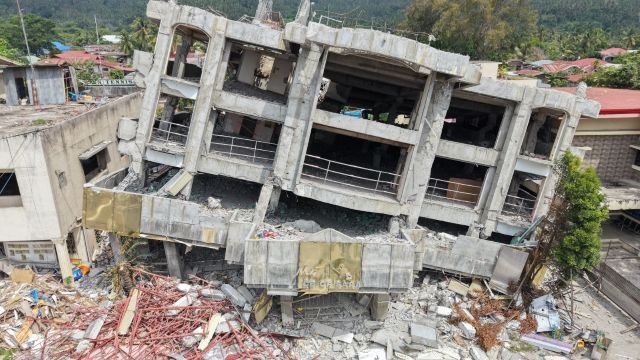
The shallow-depth earthquakes severely damaged Caracas and the coastal region of La Guaira, collapsing hundreds of buildings and triggering nationwide rescue operations. The disaster has become one of the country’s deadliest natural calamities in decades.
Philippines Earthquake (2026)
A powerful 7.8-magnitude earthquake struck off the coast of Mindanao on June 8, 2026.
The earthquake occurred due to tectonic movement along the Cotabato Trench and claimed 68 lives. Authorities reported widespread infrastructure damage, although the offshore location helped limit casualties compared to similar inland earthquakes.
Myanmar Earthquake (2025)
Myanmar suffered one of its worst natural disasters on March 28, 2025, when a devastating 7.7-magnitude earthquake struck along the Sagaing Fault.
The earthquake caused an estimated 3,600 to 5,300 deaths, injured more than 11,000 people, and left hundreds missing. Tremors were also felt across Thailand, China, and neighboring countries, making it one of Southeast Asia’s most destructive seismic events in recent years.
Russia Kamchatka Earthquake (2025)
On July 29, 2025, an enormous 8.8-magnitude earthquake struck off Russia’s Kamchatka Peninsula.
It became the largest earthquake of the decade by magnitude and one of the six strongest ever instrumentally recorded. Fortunately, casualties remained relatively low because the epicenter was located near a sparsely populated region.
Afghanistan Earthquake (2025)
A shallow 6.0-magnitude earthquake struck near Jalalabad on August 31, 2025.
The earthquake devastated Afghanistan’s mountainous Kunar province. While Taliban authorities reported 2,217 deaths, the World Health Organization estimated the actual death toll at nearly 3,000.
| Major Earthquakes | Year | Magnitude | Estimated Death Toll |
|---|---|---|---|
| Venezuela | 2026 | 7.2 & 7.5 | Hundreds |
| Philippines (Mindanao) | 2026 | 7.8 | 68 |
| Myanmar | 2025 | 7.7 | 3,600–5,300 |
| Russia (Kamchatka) | 2025 | 8.8 | Limited |
| Afghanistan | 2025 | 6.0 | Up to 3,000 |
| Türkiye-Syria | 2023 | 7.8 & 7.7 | 56,000+ |
| Haiti | 2021 | 7.2 | 2,207 |
Most of the world’s strongest earthquakes occur along active tectonic plate boundaries such as the Pacific Ring of Fire, the East Anatolian Fault, the Sagaing Fault, and major subduction zones. Shallow earthquakes often cause significantly greater destruction because seismic waves reach the surface with greater intensity.
Türkiye-Syria Earthquake (2023)
The twin earthquakes that struck southern Türkiye and northern Syria on February 6, 2023, remain the deadliest earthquake disaster of the 21st century.
The first earthquake measured 7.8 magnitude and was followed hours later by another 7.7-magnitude quake. More than 56,000 people were confirmed dead, while millions were affected across both countries. The disaster triggered one of the largest international humanitarian relief operations in modern history.
Haiti Earthquake (2021)
On August 14, 2021, Haiti was struck by a shallow 7.2-magnitude earthquake.
The disaster killed 2,207 people, injured more than 12,000 others, and left hundreds missing. Critical infrastructure, including hospitals, roads, schools, and homes, suffered extensive damage, severely affecting rescue and recovery efforts.
The World’s Deadliest Earthquakes demonstrate the enormous humanitarian and economic consequences of major seismic events. Governments continue investing in earthquake-resistant infrastructure, early warning technology, disaster preparedness, and international emergency response systems to reduce future loss of life.
Conclusion
The World’s Deadliest Earthquakes serve as powerful reminders of nature’s unpredictable force. While advances in engineering and disaster management have improved resilience, recent events in Venezuela and other countries show that strong earthquakes continue to pose significant risks worldwide. Strengthening preparedness, rapid emergency response, and international cooperation remain essential to minimizing future tragedies.