
Patna, Culture and Heritage Desk | WEBVARTA
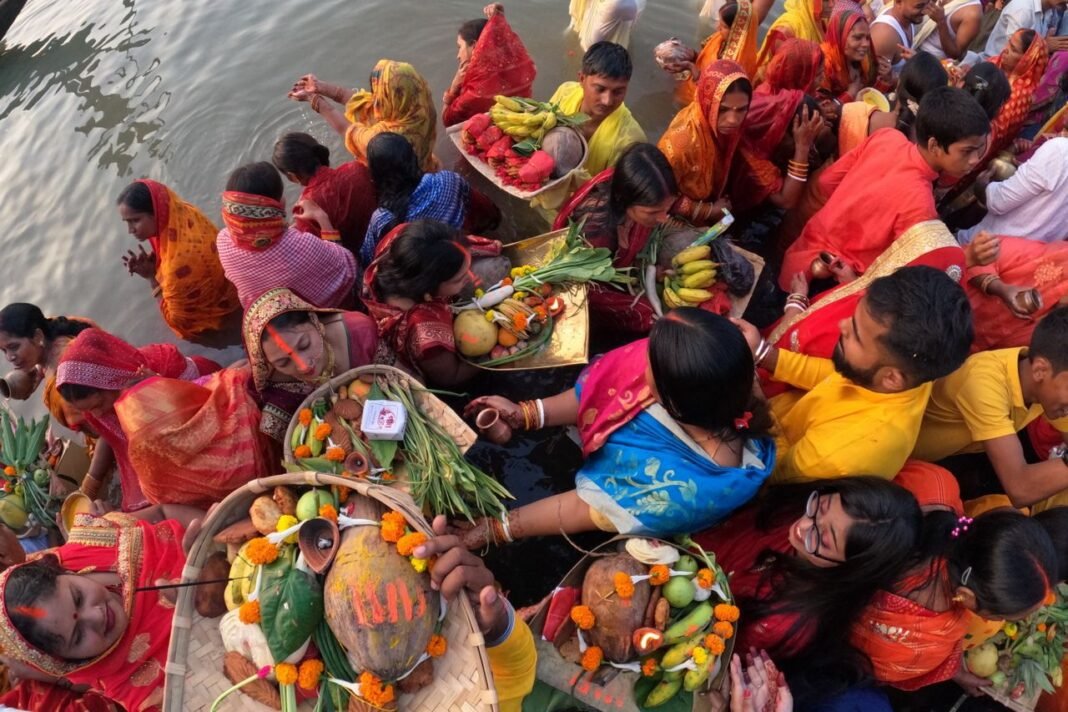
Every year, as the sun begins to set over rivers, ponds and temporary ghats, millions of devotees gather with bamboo baskets filled with fruits, thekua and traditional offerings. Their prayers are directed towards the setting sun first and the rising sun the following morning. This is Chhath Puja, a festival deeply rooted in Bihar’s cultural life that has travelled far beyond the state’s borders, becoming an expression of identity, family heritage and community belonging for millions of people across India and abroad.
For many families from Bihar, Chhath is not simply another date on the religious calendar. It is a connection with ancestral villages, childhood memories, family traditions and a shared cultural language. As people migrated to cities such as Delhi, Mumbai, Kolkata, Surat and Bengaluru for education and employment, they carried the festival with them. Today, its celebrations bring together communities across India and in countries with significant Indian diaspora populations.
- Festival: Chhath Puja, also known as Chhath Mahaparva
- Principal worship: Surya Dev and Chhathi Maiya
- Traditional roots: Bihar and the wider Gangetic region
- Duration: Four days
- Main offerings: Sandhya Arghya and Usha Arghya
- Traditional prasad: Thekua, seasonal fruits and other offerings
- Modern reach: Across India and international diaspora communities
Chhath Puja: A Festival Rooted in Bihar’s Cultural Heritage
Chhath is among the most recognisable religious and cultural traditions of Bihar. It is also widely observed in Jharkhand, eastern Uttar Pradesh and neighbouring regions. The festival is dedicated to the Sun God, Surya, and Chhathi Maiya, with devotees expressing gratitude for life, health, prosperity and the natural forces that sustain the world.
The Bihar government’s tourism portal describes Chhath as a major festival of the state and highlights its distinctive tradition of offering prayers to both the setting and rising sun. The observance is closely connected with rivers, ponds, seasonal produce, household preparation and community participation.
Its cultural importance comes not only from religious belief but also from the way families participate. Preparations often involve several generations, with elders passing down traditional songs, recipes, ritual practices and local customs to younger family members.
Why Do Devotees Worship Both the Setting and Rising Sun?
One of the most distinctive features of Chhath Puja is the offering of Arghya to the setting sun before the final prayers to the rising sun the next morning.
The evening offering, known as Sandhya Arghya, expresses gratitude to the setting sun. The morning offering, called Usha Arghya, welcomes the rising sun and symbolises renewal and continuity.
This sequence gives the festival a wider cultural meaning. Devotees honour not only the beginning of a new day but also the conclusion of the day that has passed. The cycle of sunset and sunrise becomes a reminder of nature’s continuity and the importance of gratitude.
Chhath also has a strong relationship with the natural environment. Water bodies, sunlight, seasonal fruits, bamboo baskets and traditional food preparations are central to the observance. These elements make the festival visibly connected to the natural world.
The Four Days of Chhath: Rituals That Bring Families Together
Chhath Puja follows a four-day sequence of observances. Although local customs and household practices may differ, the principal stages are widely recognised.
| Day | Ritual | Significance |
|---|---|---|
| First day | Nahay Khay | Ritual bathing, cleaning and preparation of food. |
| Second day | Kharna | A day of discipline and fasting, traditionally concluded with an evening meal and prasad. |
| Third day | Sandhya Arghya | Offerings are made to the setting sun at rivers, ponds and ghats. |
| Fourth day | Usha Arghya | Prayers are offered to the rising sun, followed by the conclusion of the observance. |
Many devotees observe demanding fasts, including a period without food or water. The person undertaking the observance is commonly called a vrati or parvaitin. The discipline involved is one reason Chhath is regarded as a major commitment for participating families.
Thekua, Bamboo Baskets and Folk Songs: The Cultural Language of Chhath
The identity of Chhath is also reflected in its traditional food, ritual objects and music. The thekua, usually prepared with wheat flour, jaggery or sugar and ghee, is among the festival’s most recognisable offerings. Seasonal fruits and other locally familiar produce are arranged in bamboo baskets known as soop.
These objects are more than decorative elements. They connect the festival with household skills, local agriculture, traditional craftsmanship and the everyday culture of the region.
Chhath folk songs have an equally important place. Sung during household preparations and at the ghats, they carry stories of devotion, family relationships, nature and the emotional bond between devotees and Chhathi Maiya. The late folk singer Sharda Sinha played a significant role in bringing traditional Chhath music to a much wider audience.
For many people, the sound of these songs is inseparable from memories of returning home, preparing prasad and gathering with relatives before the evening Arghya.
How Migration Took Chhath Beyond Bihar
The growing visibility of Chhath across India is closely connected with migration. Over several decades, people from Bihar and neighbouring regions moved to metropolitan cities and industrial centres in search of employment, education and better opportunities.
They did not leave their cultural traditions behind. Families began organising celebrations in residential neighbourhoods, community grounds, artificial ponds, riverbanks and other suitable locations. Local associations and community groups helped arrange offerings, cleaning drives, temporary ghats and cultural programmes.
Delhi-NCR, Mumbai, Kolkata, Surat, Ahmedabad, Hyderabad and Bengaluru have become important centres of Chhath celebrations. For migrants living far from their ancestral villages, the festival provides an opportunity to recreate familiar traditions and reconnect with people who share similar cultural backgrounds.
Research and cultural reporting have also highlighted how the festival is adapting to urban life. In some households, families unable to reach a river or public ghat organise suitable arrangements at home. Younger generations increasingly learn the traditions from parents, grandparents and community groups, while digital communication allows relatives living overseas to participate in family celebrations from a distance.
Chhath as an Identity for Bihari Communities Across India
For many people who identify with Bihar’s cultural heritage, Chhath has become an important expression of belonging. The festival allows people living outside their home state to maintain a visible connection with their roots.
In cities where families from different districts of Bihar live together, Chhath celebrations often become large community events. People contribute to preparations, arrange facilities for devotees, share food and help maintain the ghats. Participation can extend beyond those observing the fast, involving neighbours, volunteers and people who simply come to assist.
The festival’s appeal is also linked to its community-centred character. The focus is on collective participation, discipline and shared offerings. People from different social and economic backgrounds gather at the same water bodies for the same principal rituals.
For second-generation families raised outside Bihar, these celebrations can become an important way of understanding family history. Children learn traditional songs, the names of rituals, the significance of the offerings and the stories associated with the festival.
From Local Tradition to International Celebration
Chhath has also travelled beyond India’s borders through migration and diaspora communities. Celebrations are organised in countries including Mauritius, Fiji, Suriname, the Netherlands and the United Arab Emirates, where people of Indian origin continue to preserve traditions associated with Bihar and the Gangetic region.
The Ministry of Culture has taken steps towards a multinational nomination of Chhath Mahaparva for UNESCO’s Representative List of the Intangible Cultural Heritage of Humanity. In September 2025, the ministry held consultations with representatives of the UAE, Suriname and the Netherlands to seek cooperation for the proposed nomination under the 2026–27 cycle.
This is an important cultural recognition initiative, but it should not be confused with an existing UNESCO inscription. The proposal aims to document and safeguard a living tradition while highlighting the communities that continue to practise it across national borders.
Is Chhath Puja an Ancient Tradition? What History Tells Us
Chhath is frequently associated with ancient sun worship and stories from Hindu epics. References to Surya worship appear in Vedic literature, while popular traditions connect the festival with figures such as Karna and Draupadi in the Mahabharata.
These narratives are important to the religious understanding of the festival, but they should be distinguished from independently established historical evidence about the exact origin and age of Chhath in its present form.
Scholars studying the festival have examined its ritual practices, material culture, household traditions and relationship with the agrarian life of the middle Gangetic plains. Contemporary academic research also treats Chhath as a living religious tradition whose practices and meanings continue to evolve.
Rather than assigning the festival a precise historical starting date without conclusive evidence, it is more accurate to recognise its long-standing regional roots and the continuing role it plays in the social and cultural life of North India.
What Makes Chhath Relevant to a New Generation?
Modern lifestyles have changed how people organise celebrations, but the festival continues to create opportunities for family participation. Social media, video calls and community platforms help people share photographs, songs and messages, while traditional preparations remain central to many households.
For younger members of migrant families, Chhath can be a way to discover their family’s language, regional food, music and history. For older generations, it offers an opportunity to pass on customs that might otherwise become less familiar to children growing up far from their ancestral homes.
The festival’s continuing presence in urban neighbourhoods and international communities demonstrates how a regional tradition can adapt to changing circumstances without losing its distinctive cultural character.
Chhath Puja: More Than a Festival, a Shared Cultural Heritage
Chhath began as a deeply rooted regional observance in the Gangetic plains, but its significance today extends far beyond geographical boundaries. It connects families with their ancestral homes, brings communities together in cities and gives younger generations a way to understand their cultural inheritance.
From the banks of the Ganga in Bihar to community ghats in Delhi, Mumbai and other cities, and from Indian neighbourhoods to diaspora gatherings overseas, the festival continues to be observed through familiar offerings, songs and prayers.
Its journey shows how cultural identity can travel with people. For millions of families, Chhath remains a reminder that even when work, education and opportunity take them far from home, traditions can continue to create a sense of belonging.
Also Read
Sources and further reading:
- Bihar Tourism: Chhath Puja
- Ministry of Culture: Consultations on Chhath Mahaparva’s proposed UNESCO nomination
- Indian Express: Chhath Puja, its significance and cultural identity
- Academic study: Chaṭha Pūjā as lived religion
Editorial note: Chhath customs and household practices vary across regions and families. The historical narratives described above are religious and cultural traditions, not all independently verified historical accounts.