
From Crime to Collective Anger
In both cases, the initial trigger was the sheer brutality of the crime. The Nirbhaya case, which occurred in Delhi, shocked the nation not just because of the violence but because it happened in a routine setting—public transport. Similarly, a rape-murder inside a medical college or campus setting creates a sense of betrayal of “safe spaces.”
This emotional rupture is critical. When people begin to see themselves or their families in the victim, the crime stops being an isolated incident and becomes a shared societal fear.
Role of Media: Turning Incident into Narrative
Television news, print media, and now social platforms play a decisive role in amplification. In the Nirbhaya case, 24/7 coverage, survivor updates, and panel debates kept the issue alive for weeks. The victim was given a symbolic identity—“Nirbhaya” (fearless)—which made her a national figure rather than an anonymous statistic.
In similar institutional crimes, media narratives often focus on:
- Institutional negligence
- Power dynamics within campuses
- Failures of administration
This framing shifts the focus from who committed the crime to what allowed it to happen, which is inherently political.
Street Protests to Public Movement
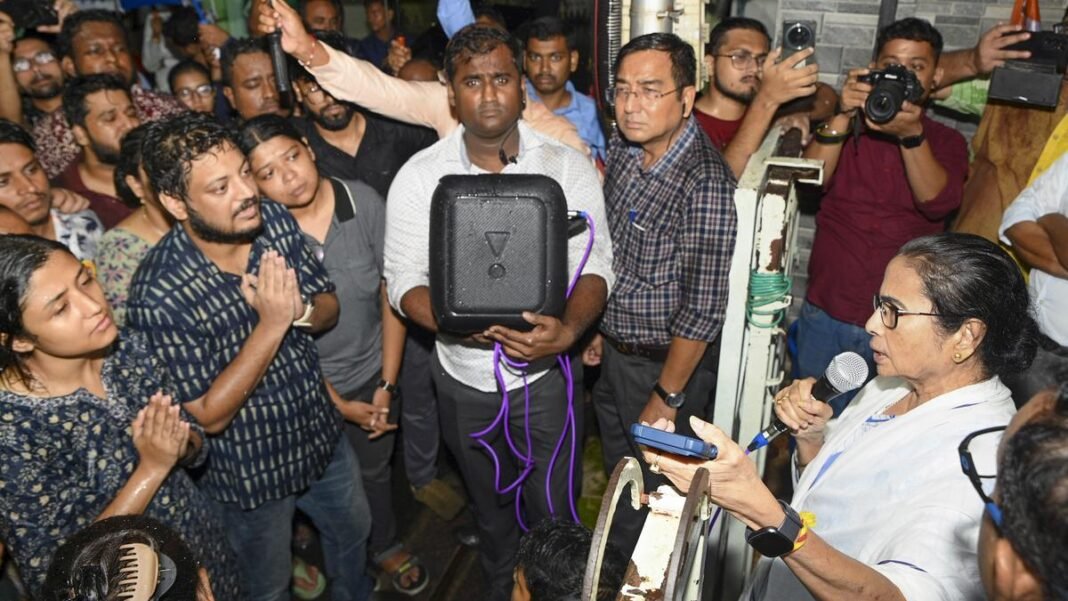
The turning point in both types of cases is mass mobilization. After the Nirbhaya incident, thousands gathered at India Gate and Raisina Hill, demanding justice. Students, activists, and ordinary citizens joined spontaneously—without a central political organizer at first.
In a college rape-murder case, especially if students are involved, campuses become epicentres of protest. Demonstrations, strikes, and marches quickly follow.
What begins as grief evolves into slogans:
- “We want justice”
- “Make our campuses safe”
- “Accountability now”
At this stage, the issue transitions from emotional to political.
Entry of Political Actors
No large public movement in India remains apolitical for long. Political parties, leaders, and pressure groups step in—sometimes to support, sometimes to capitalize.
During the Nirbhaya protests:
- Opposition parties criticized the government’s failure on law and order
- Ruling authorities were forced into damage control
In institutional cases:
- Local politicians may target college administrations or state governments
- Student wings of political parties often join protests, adding organizational structure
This phase formalizes the movement. Demands become sharper, often including resignations, inquiries, or legislative changes.
Policy Pressure and Legal Reform
The most concrete outcome of such political amplification is policy change. The Nirbhaya case led to:
- The Justice Verma Committee
- Amendments to criminal law in 2013
- Fast-track courts for sexual assault cases
In medical college or campus incidents, the pressure may result in:
- Internal inquiries
- Changes in campus security protocols
- Stricter anti-harassment mechanisms
- State-level interventions
Even when reforms differ in scale, the mechanism is similar: sustained public pressure forces institutional response.
Symbolism and Sustained Memory
For a movement to endure, it must become symbolic. The Nirbhaya case became shorthand for women’s safety across India. It is still invoked in debates, protests, and legal discussions.
Similarly, a high-profile rape-murder in a college can become symbolic of:
- Unsafe educational environments
- Abuse of authority
- Institutional silence
Symbolism ensures the issue remains politically relevant long after the immediate protests fade.
Social Media: The New Multiplier
While the Nirbhaya protests were driven largely by television and physical mobilization, more recent institutional cases gain momentum through social media:
- Hashtags amplify outrage
- Videos and testimonies spread rapidly
- Online petitions create pressure
This digital layer accelerates the shift from local incident to national issue.
The Fine Line: Justice vs. Political Exploitation
One uncomfortable reality is that political amplification can sometimes distort the original issue. While it brings attention and accountability, it can also lead to:
- Polarization
- Selective outrage
- Agenda-driven narratives
The challenge is ensuring that the core demand—justice for the victim and systemic reform—is not overshadowed by political point-scoring.
In both the Nirbhaya case and institutional rape-murder incidents, the journey from crime to political movement follows a clear trajectory:
Brutality → Public outrage → Media narrative → Mass protests → Political involvement → Policy pressure
These cases reveal not just failures of safety, but the power of collective voice in a democracy. When society refuses to normalize violence, even a single incident can reshape laws, institutions, and national consciousness.
RG Kar victim’s mother wins in Panihati
RG Kar rape victim’s mother and BJP candidate Ratna Debnath has won votes in the Panihati Assembly constituency in North 24 Parganas.
The Panihati seat has emerged as one of the most closely watched contests in the West Bengal election, with Debnath facing TMC candidate Tirthankar Ghosh, the son of a five-time sitting MLA.