
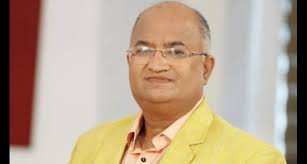
Rahul and myself worked in ZEE News in the year 1996 and we were all amazed in the newsroom with his sense of clarity and research over any subject that we used to discuss in the news meeting at ten. He always avoided the limelight but was the main guy behind any big investigative story. The Insight program used to have his inputs always. I admired his hard work and obviously he was the favourite of our seniors in the newsroom. Eventually he started working on the nitty gritty and emerged as a force to reckon with when it came to manage a news channel in totality. He saw every thing inside out. He was very particular with details. A man known for his credibility and a spotless track record Rahul Mahajan has raised a very vital issue troubling the satellite television news channels. I am sure the media industry will listen to his words carefully and the government too will find his points useful while formulating a masterplan for the TV industry at large.
Rahul Mahajan as the Head Corporate Affairs Bennett Coleman & Co.Ltd ( The Times Group) feels India’s television industry is entering a phase of major change. For decades, the business of television news and entertainment has depended heavily on TRPs — the ratings that decide which channels attract advertisers, command influence, and dominate prime-time conversations. But the credibility of that system has increasingly come under scrutiny, forcing the government to step in with a sweeping overhaul of audience measurement rules.
Rahul says the timing is significant.
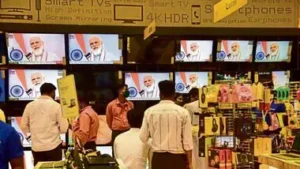
India today has nearly 230 million television households and one of the world’s largest TV audiences. Yet the ratings that influence thousands of crores in advertising revenue have traditionally been based on data collected from only a small number of metered homes. That imbalance has triggered years of debate within the broadcasting industry over whether the system genuinely reflects how Indians watch television.

The government’s new TV Ratings Policy 2026 is being presented as an attempt to correct those weaknesses. The proposed reforms aim to expand the number of households used for ratings measurement, tighten oversight of rating agencies, curb artificial inflation of viewership numbers, and gradually integrate digital viewing patterns into the system.
On the surface, many of these changes appear reasonable.
The existing framework has faced repeated allegations of manipulation. Questions have often been raised about channels influencing selected households where audience meters are installed. Another major concern involved so-called “landing pages,” where certain channels allegedly benefited from automatically appearing when viewers switched on their set-top boxes. Critics argued that this created inflated viewership figures without reflecting actual audience choice.
At the same time, television consumption itself has evolved rapidly. A growing share of viewers — especially younger audiences in urban India — now consume news and entertainment through OTT platforms, mobile phones, Connected TVs, and streaming applications. Traditional ratings systems have struggled to keep pace with this shift. The government’s position is that a modern media market cannot continue relying on an outdated measurement structure.
Under the revised policy framework, audience measurement agencies will have to sharply increase the number of metered homes across the country. The government has also lowered financial barriers for new entrants in the ratings business, a move intended to reduce the dominance of a single ratings agency and encourage greater competition.
Rahul says supporters of the reforms believe these measures could make television ratings more representative and more difficult to manipulate. A larger and more diverse sample size, they argue, would improve confidence in the data used by advertisers, broadcasters, and agencies alike. There is also broad agreement that the industry’s dependence on sensational programming has become a serious problem.
Television news, in particular, has increasingly rewarded aggressive presentation over careful reporting. Loud debates, dramatic graphics, emotional narratives, and nonstop “breaking news” culture are often driven by the pressure to capture audience attention in a highly competitive ratings market.
This is where the debate becomes more complicated adds Rahul Mahajan.
The government’s decision to temporarily suspend TRP reporting for news channels during periods of international tension has sparked concern among broadcasters and media observers. Officials defended the move by arguing that ratings pressure was encouraging irresponsible and speculative coverage during sensitive geopolitical developments. Many would agree that parts of Indian television news have crossed lines in pursuit of viewership. But critics argue that allowing the government to pause ratings during politically sensitive moments could create a dangerous precedent. In an industry where advertising revenue depends directly on audience data, withholding ratings can significantly affect the commercial position of channels.

That is why some broadcasters view the reforms with caution, even if they support cleaning up the ratings system itself. Beyond the policy debate, the market itself is already moving in a different direction. Advertisers are steadily increasing their spending on digital platforms that provide instant and measurable audience data. According to the latest industry estimates by the Internet and Mobile Association of India (IAMAI) and Kantar, India’s digital advertising market crossed ₹70,000 crore in 2025 and is now growing significantly faster than traditional television advertising. Connected TV (CTV) viewership has also expanded sharply, with industry reports estimating that India now has more than 30 million CTV households, driven by smart TV adoption and affordable broadband access. Platforms such as YouTube, OTT streaming services, and digital news networks have become increasingly attractive to advertisers because they offer real-time analytics, audience segmentation, and performance tracking — something traditional television measurement systems still struggle to provide consistently. As a result, brands are gradually shifting portions of their media budgets away from conventional TV advertising toward streaming platforms, online video ecosystems, and programmatic digital campaigns where audience behaviour can be monitored almost instantly. In many ways, the current debate reflects a much larger transition taking place across the media industry.
Rahul says this with lot of emphasis that television is no longer the single dominant screen it once was. Viewers now move constantly between television, smartphones, streaming apps, and social media platforms. The old ratings structure, built around linear television habits, is being forced to adapt to a far more fragmented media environment.
The government’s reforms may ultimately improve transparency and make audience measurement more reliable. But the challenge will be ensuring that efforts to regulate the ratings system do not gradually evolve into broader influence over editorial behaviour. India’s broadcasting industry clearly needed reform. Rahul smiles and takes a sip of black coffee and says the real test now is whether those reforms strengthen public trust without weakening the independence that a healthy media ecosystem requires.
Rahul Mahajan is one of those few journalists who started his career in TV journalism since the inception of private news channels in the country. Although Rahul Mahajan has achieved the echelon of success in TV journalism, still he finds satisfaction in conversing with aspiring young journalists and enlightening them on true values of journalism. Rahul Mahajan has been in the field of journalism for the last 23 years. During his tenure, he has worked on every aspect of TV journalism be it reporting from the field or conceptualization and execution of audio-visual programs to managing the commercial aspect of a TV station. Having worked with the reputed Media Organisations like Jansatta and TV channels like Zee News, Aaj Tak, Star News, News 24 and Doordarshan, he was entrusted with covering some very important areas like Prime Minister’s office, Ruling Party, Parliament, Defence and Foreign Affairs. As a reporter he specialised in covering the Prime Minister’s office, BJP, RSS, J&K (Anti- terror Operations) and Pakistan. He has been to Pakistan thrice and has covered various aspects of India-Pakistan relationship. As an editor in various channels and news management person he acquired the skill of managing news operations (Editorial and Technical) and leading a team of newsmen and women.
Rahul Mahajan served as the Editor-in-Chief of Rajya Sabha TV (RSTV) from 2018 to 2020
From the desk of Irfan Sheikh Managing Editor Webvarta