
From Draupadi to the Ballot Box: Rupa Ganguly and the Winds of Change in Bengal
Kolkata | May 2026
The 2026 Assembly elections have done more than decide political power—they have captured a restless public mood. Across West Bengal, a striking voter turnout and sharply contested seats signaled one unmistakable message: people were ready to challenge the status quo.
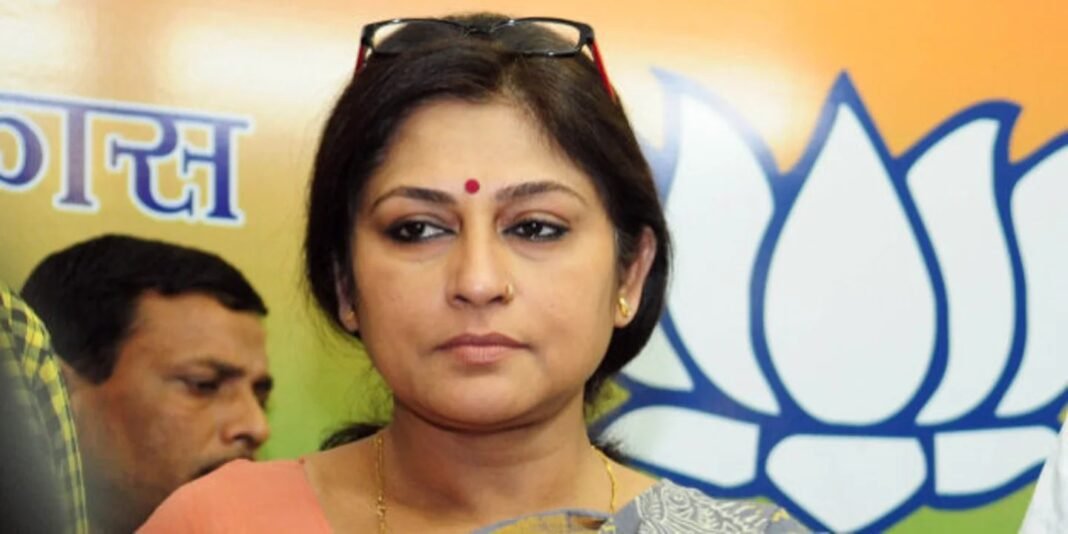
At the heart of this churn stands Rupa Ganguly—a figure whose journey from television screens to political battlegrounds mirrors the state’s own transition. Once immortalized as Draupadi in Mahabharat, Ganguly now finds herself in a very different epic—one defined not by scripts, but by strategy, sentiment, and survival.
A Contest That Became a Statement
The Sonarpur Dakshin constituency turned into one of the most closely watched races of the election. Ganguly’s face-off with Arundhuti Maitra of the All India Trinamool Congress (AITC) was more than a local contest—it became symbolic of a larger ideological clash.
Her performance in the constituency reflects a deeper shift. The electorate, cutting across urban and semi-urban lines, appeared willing to embrace a candidate who combined cultural familiarity with political assertiveness.
The Rise of a New Political Narrative
Ganguly’s emergence is inseparable from the broader surge of the Bharatiya Janata Party (BJP) in Bengal. Long considered a difficult terrain for the party, the state has now become the stage for one of its most significant breakthroughs.
This election was not just about party machinery—it was about narrative. The BJP’s messaging of change, governance, and national alignment found resonance among voters who had, for years, remained loyal to Mamata Banerjee and her brand of regional politics.
Celebrity, Credibility, and Calculation
Skeptics often dismiss celebrity politicians as symbolic figures. But Ganguly’s trajectory challenges that assumption. Her tenure in the Rajya Sabha and her role within the BJP’s organizational structure demonstrate a steady political evolution—not a sudden leap.
Her public persona—shaped by decades in the entertainment industry—gave her recognition. But recognition alone does not win elections. What made her campaign effective was the blending of visibility with grassroots outreach and a carefully calibrated political message.
A Defining Moment for Women in Politics
Should Ganguly rise further within the state’s leadership structure, it would mark a significant moment—not just for her party, but for representation in Bengal politics. Following the long tenure of Mamata Banerjee, another woman stepping into a position of power would reinforce the state’s unique space in India’s political landscape.
Beyond One Election
The 2026 verdict is not merely a win or loss for individual candidates—it is a reset. It reflects a population willing to reconsider loyalties, question continuity, and experiment with alternatives.
For Rupa Ganguly, this moment is both culmination and commencement. The actress who once portrayed resilience and dignity on screen now faces the far more complex challenge of delivering it in governance. And for Bengal, the message is clear: the script has changed—and this time, the people are writing it.
Suvendhu Adhikari is the son of Sisir Adhikari former Union Minister of state for Rural development in the Manmohan Singh government. He was initially with the congress and then moved to Trinamool Congress. He might have done all the hard work but – the thumping majority and a big big win was due to none other than PM Narendra Modi. Hence by giving him the CM seat BJP will endorse that Adhikari’s efforts were very vital for the win. But to keep someone who can be an antidote to Mamata- the leader has to be a lady and that too who can follow the commands from the PMO.