
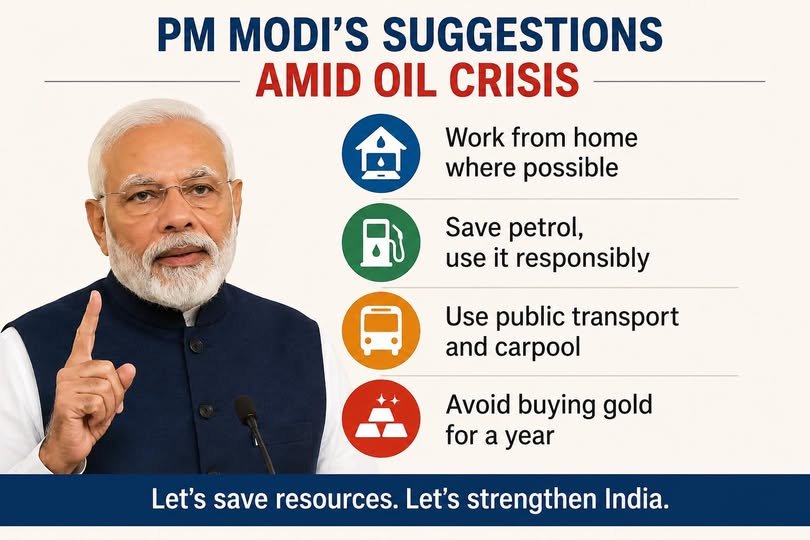
Prime Minister Narendra Modi on Sunday urged citizens to revive work-from-home practices, reduce fuel consumption and avoid non-essential imports such as gold purchases as India braces for the impact of the escalating global oil crisis triggered by the Middle East conflict.
Graphics Courtesy: Statesman

Addressing concerns over soaring crude prices, PM Modi said practices adopted during the Covid-19 pandemic — including online meetings, video conferencing and remote work — should be encouraged again in the national interest to help reduce petrol and diesel consumption.
“Petrol and diesel have become expensive across the world. We must save foreign exchange spent on fuel imports by conserving fuel,” the Prime Minister said.
In a striking appeal, he also urged people to avoid buying gold for weddings for one year, saying the country must minimise pressure on foreign exchange reserves during the ongoing global economic uncertainty. The Prime Minister’s remarks come as crude oil prices surged from nearly USD 70 per barrel to around USD 126 per barrel following disruptions in West Asia and tensions around the Strait of Hormuz, through which nearly 20 per cent of global oil supplies pass.
Government and industry sources indicated that petrol and diesel prices in India may be revised upward before May 15. Oil marketing companies including Indian Oil Corporation, Bharat Petroleum and Hindustan Petroleum are reportedly facing under-recoveries of nearly ₹30,000 crore per month due to rising global crude prices.
Sources said petrol prices could increase by ₹4-5 per litre, diesel by a similar margin, while domestic LPG cylinders may become costlier by ₹40-50. Expanding his call for austerity, PM Modi also appealed to households to reduce edible oil consumption and urged farmers to cut dependence on imported chemical fertilisers by shifting towards natural farming.
India has so far avoided fuel shortages despite the global crisis by increasing LPG production, diversifying crude imports from Russia, the US and West Africa, and operating refineries at above 100 per cent capacity. The Centre had earlier reduced excise duties to shield consumers from the full impact of rising international oil prices.