
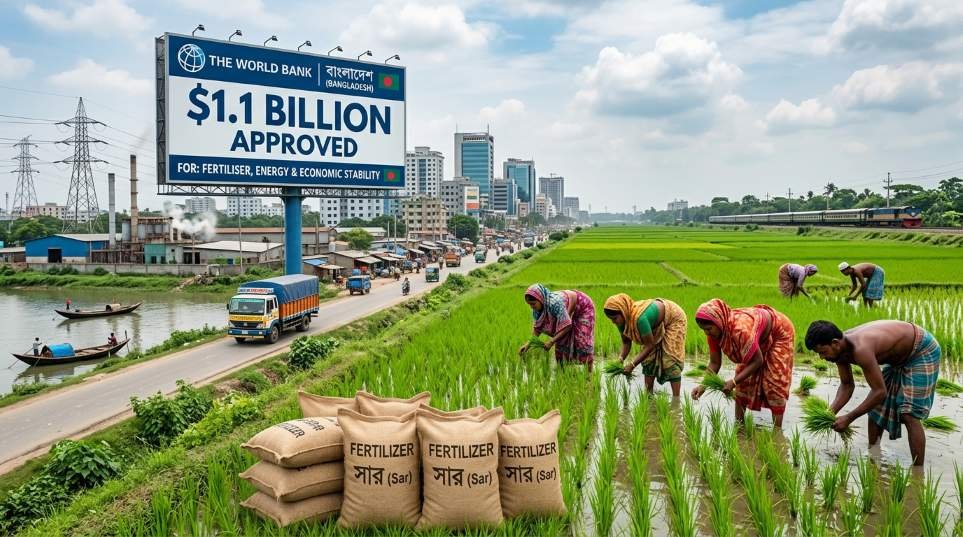
World Bank Approves $1.1 Billion Emergency Funding for Bangladesh Amid Economic Crisis
Dhaka, International Desk | WEBVARTA
World Bank approves $1.1 billion for Bangladesh in a major financial boost aimed at helping the country tackle mounting economic challenges, strengthen food security, and ensure stable energy supplies. The World Bank has approved an emergency financing package worth $1.1 billion as Bangladesh continues to battle persistent inflation, rising fuel and fertilizer costs, declining foreign aid, and slowing industrial growth. The funding is expected to provide immediate fiscal relief while supporting critical sectors essential for the country’s economic stability.
The emergency package includes dedicated funding for fertilizer imports, emergency government expenditure, livelihood support, and energy needs. The approval comes at a time when Bangladesh is facing increasing pressure on public finances due to higher import costs, shrinking fiscal space, and growing concerns over food security.
📌 Quick Info
- Funding Agency: World Bank
- Total Package: $1.1 Billion
- Beneficiary: Bangladesh
- Fertilizer Imports: $300 Million
- Emergency Support: $713 Million
- Purpose: Food security, energy support, livelihood assistance, and economic stability
World Bank Approves $1.1 Billion for Bangladesh to Strengthen Economy
World Bank approves $1.1 billion for Bangladesh as part of an emergency financial assistance package designed to help the country overcome growing macroeconomic challenges. The financing will support key government priorities, including maintaining food production, ensuring energy availability, and protecting vulnerable communities from the effects of inflation.
The World Bank said the assistance is intended to improve Bangladesh’s economic resilience while helping authorities manage immediate fiscal pressures created by global economic uncertainty.
How the $1.1 Billion Funding Package Will Be Used
The approved financing has been divided into multiple components to address Bangladesh’s most urgent needs, ranging from agriculture to emergency public spending.
| Funding Component | Amount | Objective |
|---|---|---|
| Total Emergency Package | $1.1 Billion | Economic Stability |
| Fertilizer Imports | $300 Million | Support Rice Production & Food Security |
| Emergency Expenditure | $713 Million | Cash Assistance, Livelihood Support & Energy Supplies |
Bangladesh has been experiencing sustained economic pressure due to rising global commodity prices, persistent inflation, increasing external debt repayments, weakening industrial activity, and lower foreign aid inflows. The World Bank’s emergency financing aims to provide immediate fiscal support while strengthening economic resilience.
World Bank Approves $1.1 Billion for Bangladesh to Support Agriculture
A key component of the package allocates $300 million for fertilizer imports to ensure uninterrupted agricultural production and support rice cultivation. Agriculture remains one of Bangladesh’s most important sectors, making fertilizer availability critical for food security and rural livelihoods.
Experts believe the World Bank approves $1.1 billion for Bangladesh initiative will help stabilize agricultural production and reduce pressure on domestic food prices.
Emergency Funding to Address Inflation and Energy Needs
Another $713 million has been earmarked for emergency government expenditure, including livelihood support, direct cash assistance, and essential energy supplies. The funding is expected to help Bangladesh manage rising import costs while maintaining key public welfare programmes.
World Bank approves $1.1 billion for Bangladesh at a time when inflation continues to affect household purchasing power and government finances remain under pressure.
Bangladesh Faces Growing Economic Challenges
Bangladesh has faced increasing financial challenges over the past year as higher global fuel prices, expensive imports, and slowing industrial activity have weighed on economic growth. Declining foreign aid inflows and rising debt servicing obligations have further reduced fiscal flexibility.
Officials hope the World Bank approves $1.1 billion for Bangladesh package will provide the resources needed to stabilize the economy while protecting vulnerable communities.
The World Bank’s emergency financing is expected to strengthen Bangladesh’s food security, improve fertilizer availability, support energy supplies, protect vulnerable households, and enhance overall economic stability during a period of global financial uncertainty.
Conclusion
World Bank approves $1.1 billion for Bangladesh, providing crucial financial support as the country works to navigate inflation, rising import costs, food security concerns, and slowing economic activity. The funding package demonstrates continued international confidence in Bangladesh’s long-term economic prospects while offering immediate relief through support for agriculture, energy, and emergency government programmes.