New Delhi, World Affairs Desk | WEBVARTA
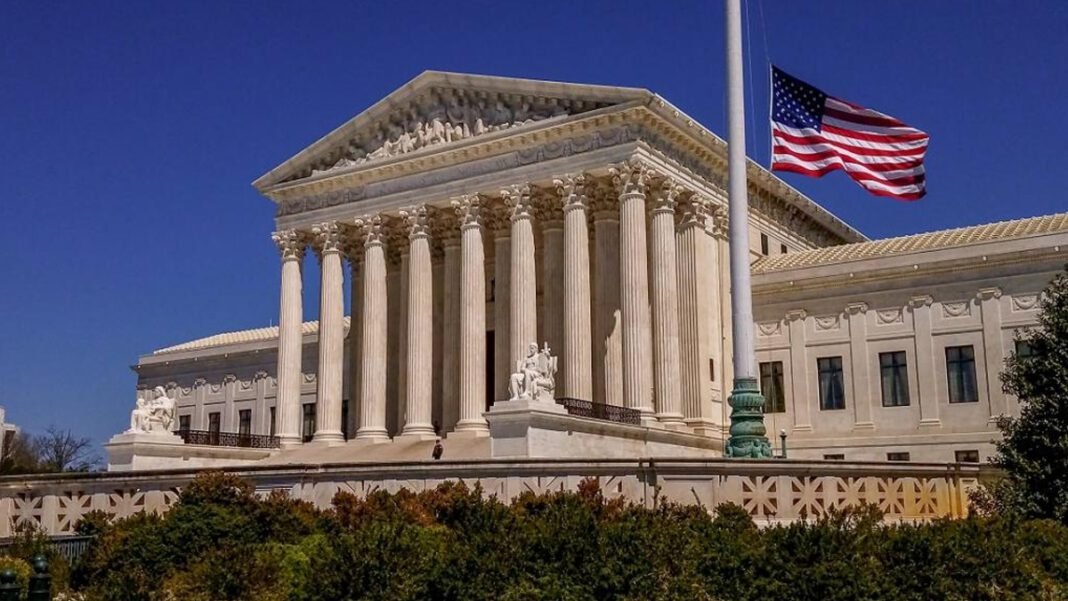
US Supreme Court Ends TPS for Haitians, Syrians in a landmark 6–3 ruling that allows the Trump administration to terminate Temporary Protected Status (TPS) for approximately 350,000 Haitians and 6,000 Syrians living in the United States. The decision is expected to have far-reaching consequences for immigration policy and could ultimately impact more than one million TPS beneficiaries from over a dozen countries.
The Supreme Court held that the Department of Homeland Security (DHS) has the authority to revoke Temporary Protected Status and that such decisions are generally not subject to judicial review. The ruling also dismissed claims that the administration’s decision was motivated by racial bias, stating that the policy could be justified on race-neutral grounds.
Temporary Protected Status has long served as a humanitarian safeguard for individuals unable to safely return to their home countries because of war, armed conflict, natural disasters, or other extraordinary conditions. With the latest ruling, uncertainty has grown for thousands of migrant families who may now face the possibility of losing legal protection from deportation.
📌 Quick Info
- Court: U.S. Supreme Court
- Verdict: 6–3 in Favor of Trump Administration
- Program: Temporary Protected Status (TPS)
- Haitian Beneficiaries Affected: Around 350,000
- Syrian Beneficiaries Affected: Around 6,000
- Potential Overall Impact: More than 1 Million TPS Holders
- Key Finding: DHS Decision Not Subject to Judicial Review
US Supreme Court Ends TPS for Haitians, Syrians
The U.S. Supreme Court ruled by a 6–3 majority that the Trump administration can proceed with ending Temporary Protected Status for thousands of Haitian and Syrian nationals residing in the United States.
Justice Samuel Alito stated that the Department of Homeland Security’s decision to revoke TPS falls within executive authority and is generally not subject to judicial review.
The judgment represents one of the most significant immigration rulings involving humanitarian protections in recent years.
What Is Temporary Protected Status (TPS)?
Temporary Protected Status (TPS) is a humanitarian immigration program that allows eligible foreign nationals to remain legally in the United States when returning to their home countries would be unsafe.
The program is typically granted to people whose countries are affected by armed conflict, natural disasters, political instability, epidemics, or other extraordinary conditions.
TPS beneficiaries receive protection from deportation and authorization to work legally in the United States during the designated protection period.
| Key Details | Information |
|---|---|
| Court Decision | 6–3 Majority |
| Program Affected | Temporary Protected Status (TPS) |
| Haitians Impacted | Approximately 350,000 |
| Syrians Impacted | Approximately 6,000 |
| Legal Finding | DHS Decision Not Subject to Judicial Review |
| Potential Wider Impact | Over 1 Million TPS Beneficiaries |
The Supreme Court’s decision could reshape U.S. immigration policy by giving the executive branch broader authority over Temporary Protected Status. The judgment may also influence future legal challenges involving humanitarian immigration protections and executive powers over migration policy.
Court Rejects Claims of Racial Bias
The Supreme Court also rejected arguments that the Trump administration’s decision was based on racial discrimination.
According to the ruling, the administration’s actions could be supported by race-neutral policy considerations, making the legal challenge unsuccessful.
This finding removes one of the principal arguments raised against the revocation of TPS protections.
More Than One Million TPS Holders Could Be Affected
Beyond Haitian and Syrian nationals, the ruling may have implications for TPS beneficiaries from several other countries whose protections have also been revoked under the Trump administration.
These include migrants from Afghanistan, Venezuela, Yemen, South Sudan, and several other nations that have received TPS designations due to conflict or humanitarian crises.
Immigration experts say the ruling could influence future policy decisions affecting more than one million individuals currently covered under Temporary Protected Status.
Immigration Policy Faces Renewed Debate
The ruling is expected to intensify discussions over U.S. immigration reform and humanitarian protections.
Supporters argue that immigration policy should remain within the authority of the executive branch, while critics warn that ending TPS protections could expose vulnerable migrants to deportation despite continuing instability in their home countries.
Legal experts expect further policy debates as federal authorities determine the implementation timeline for affected TPS holders.
The decision in which the US Supreme Court Ends TPS for Haitians, Syrians could significantly affect immigration policy, humanitarian protections, and deportation proceedings in the United States. It may also shape future executive decisions involving Temporary Protected Status for nationals from multiple conflict-affected countries.
Conclusion
The ruling that the US Supreme Court Ends TPS for Haitians, Syrians marks a major development in U.S. immigration law. By allowing the Trump administration to revoke Temporary Protected Status and limiting judicial review of such decisions, the judgment could impact hundreds of thousands of migrants immediately and potentially more than one million TPS beneficiaries in the future. The decision is likely to remain central to ongoing debates over humanitarian protections, executive authority, and immigration reform in the United States.