
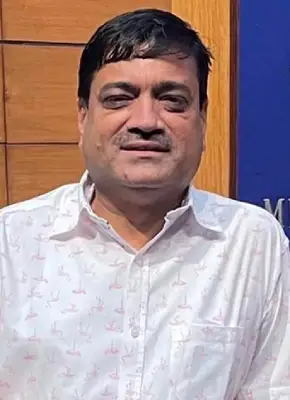
Dr Fareed Chughtai
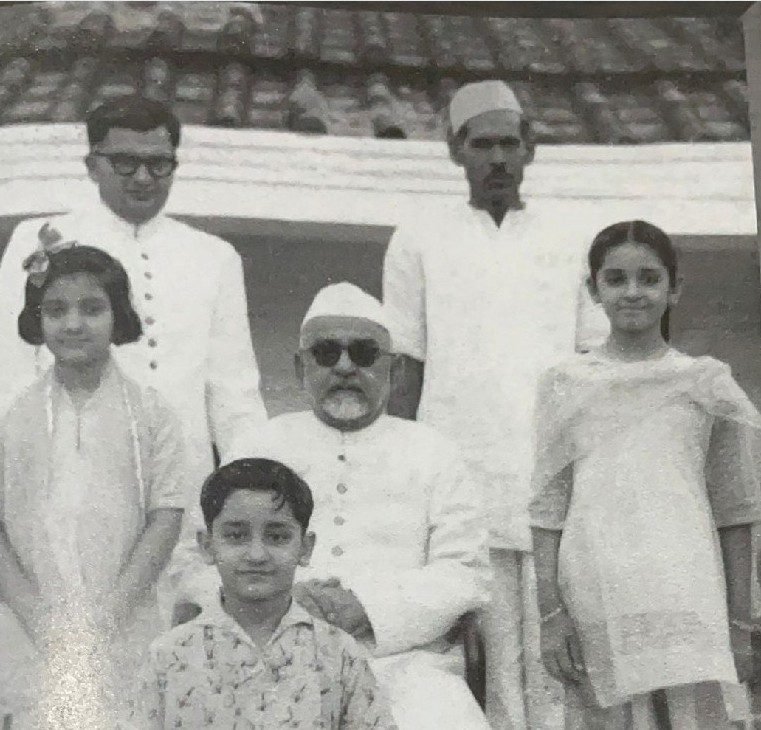
Zakir Husain Khan (1897-1969) has an extraordinary role in the saga of India’s history as a philosopher, educationalist, and statesman. The ideas he generated and the institutions he created will have an enduring impact on the thinking and democratic life of India, long after his passing away. He was born into colonial rule (1897), while the education function was, in its own right, a major agent of political activity. He approached knowledge as a catalyst for social reform and national consciousness from his very first encounter with it. Despite the numbers of public leaders who entered politics through mass mobilization, Zakir Husain’s path was through education; he saw that without a society educated and driven by moral values, there would be no chance of the legal and constitutional basis for political freedom in India having any stability. One of his significant contributions was to help provide a philosophical basis for national education policy in India. For him, education should provide more than the means for people to become clerks or obtain degrees; it should also encourage the development of socially responsible citizens. In contrast to the colonial model, which was created without regard for the unique situations and needs of Indian people, the basis for national education in India introduced by Dr. Zakir Husain has continued to evolve.
He played an important role in the development of Jamia Millia Islamia at a time when the university was mired in financial distress and uncertainty regarding administrative stability. His full commitment to its continued existence and expansion transformed Jamia into a national institution based upon Indian culture, secularity, and social responsibility. It was a contribution to nation-building through the establishment of a strong educational institution; it was also an intellectual contribution to the future of education in India. He was influenced by Mahatma Gandhi, who had a strong belief in the value of basic education. He believed that education must connect the student’s experience of manual labor, mental development, and ethical/moral conduct into one continuous process. This would eliminate the gap between manual labor and intellectual development, as well as reinstate the value of work. His work to develop an educational philosophy for the future of India was built on a foundation of social and ethical values. As an education administrator, he was instrumental in the development of policies related to higher education and committees responsible for implementing those policies. Another major contribution of him was to discuss about the importance of teachers as nation builders and the fact that their influence reaches far beyond the walls of the classroom. He consistently maintained that the determination of the quality of an education depends on the character, commitment and integrity of the person providing that education, not the building or curriculum in which it occurs.
Dr. Zakir Husain’s time as Governor of Bihar revealed how an academic approach to policy and administration can increase efficiency, fairness, and accountability. His administration exemplified fairness, patience and adherence to the Constitution. His work as the Vice President and then later as Indian President further emphasized his contributions to maintaining a constitutional democracy. He brought both moral and intellectual rigour to the highest positions of power in the nation. He thought that all constitutional offices require a delicate balance of self-restraint and consideration of respect for democratic institutions as opposed to pursuing one’s selfish ambition. As President, his speeches greatly influenced and shaped the public discourse at that time. His speeches were of an academic nature—thoughtful, reflective, well-organized, and concerned with creating a vision for the country into the future.
In addition to being a prolific author, he contributed significantly to Urdu literature, educational philosophy, and reformed education in India through his own writings. He wrote extensively in Urdu, translated numerous significant works into this language, and made global concepts available to Indian readers. Example works include Friedrich List’s National System of Economics, Edwin Cannan’s Elements of Economics, and Plato’s Republic.
Much of his writing dealt with education and reforming education in India. Through works such as Aala Taleem, Hindustan Mein Qaumi Taleem, and Taleemi Khutbat; he addressed the purpose of education, the need for restructuring the current educational system, and the role of education in creating a nation. He believed that education must benefit society at large and create responsible citizens. He also expressed a detailed understanding of the major contributors to Urdu literature. His writings on Altaf Hussain Hali and Mirza Ghalib including Intikhab-e-Ghalib illustrated a deep connection to Urdu’s literary past and culture. His writings connected literature with national passion and ethical duty.
In addition to writing scholarly papers, he also wrote children’s fiction using various pseudonyms. He felt it was essential to help children develop moral values and imagination from an early age. His children’s stories became part of different collections, including Uqab Aur Doosri Kahaniyan; these books will appeal to anyone who has a love of stories and wishes to instill values in their own children.
He was also an intellectual and was interested in economics and higher education. In 1946, drama (based on his lectures) was presented in a book called Capitalism: An Essay in Understanding. In 1965, he published The Dynamic University, which contained his Convocation addresses and outlined his thinking on how universities could be “living” institutions that respond to the social changes around them.
As president, he continued to encourage others in appreciating literature and culture by chairing a committee formed in 1969 to celebrate the Ghalib Centenary and recommend that a Ghalib Institute be created in Ghalib’s name. He went on to inaugurate the Ghalib Academy in Delhi, which further illustrates how he devoted his life to education, literature and preserving culture. He is an example of excellence through education, ethical conduct, and service; his life and contributions exemplify excellence in education, ethics and societal service. His legacy is one of the most important and least well-known figures in Indian history who has had many contributions to Indian education philosophy, building institutions, constitutional democracy, and secularism. A review of his body of work indicates that he still has much to say to today’s India about education, ethics and service to others as these values are being severely challenged.
(The Author is the Editor in Chief of INN Today Magazine, New Delhi. He may be reached at fareedchughtai7@gmail.com)
👉 Follow Web Varta WhatsApp Channel for more on Indian education pioneers, history & culture
Read this also : दिल्ली बार काउंसिल चुनाव 2026: डॉ. शहंशाह खान के समर्थन में अहम बैठक, ओल्ड बॉयज़ ने बनाई निर्णायक रणनीति